Our fibres
Two fibres, chosen for how they behave over years rather than how they photograph.
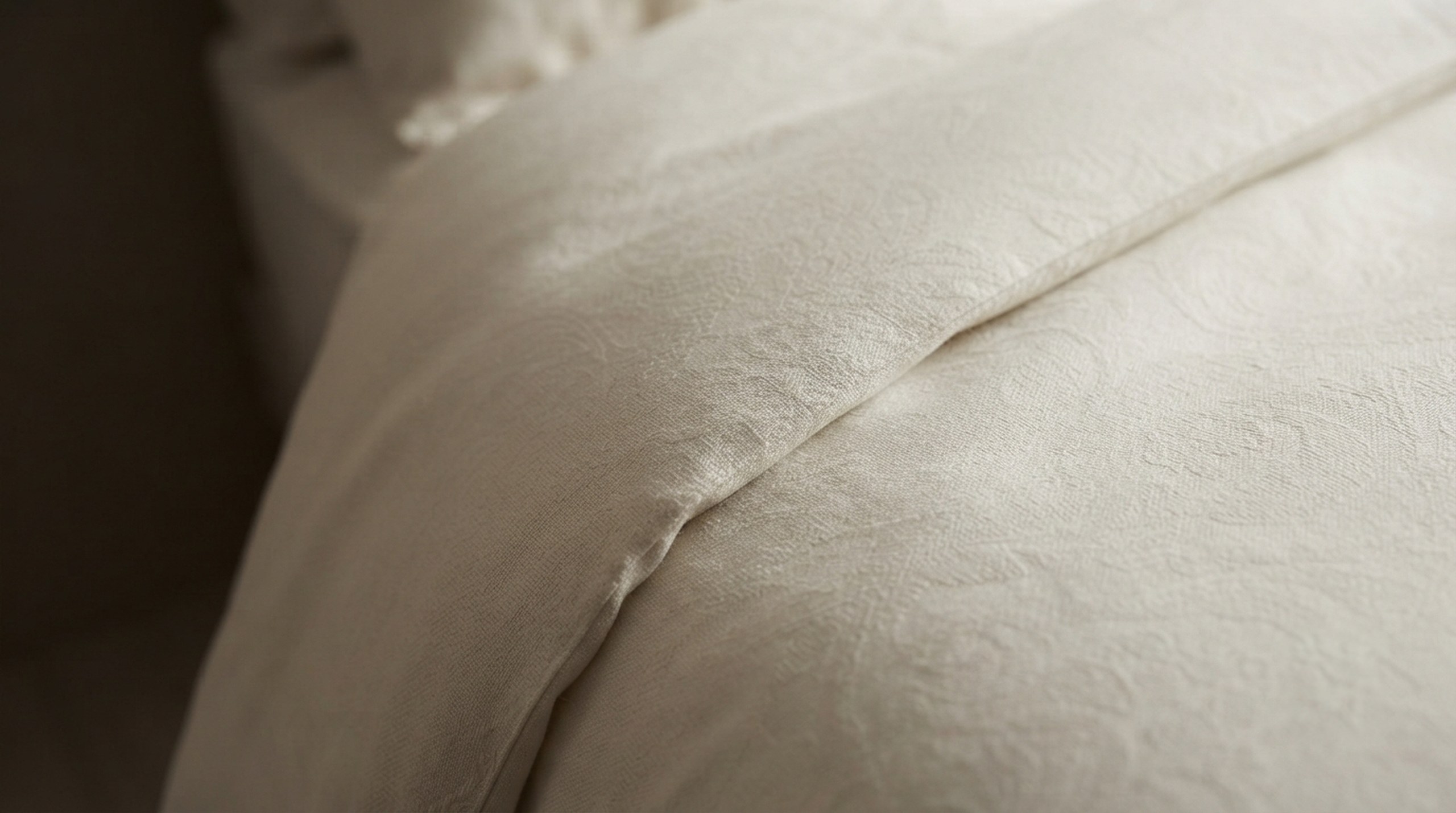
Organic cotton damask
Long-staple organic cotton, woven as a damask at [N] thread count and [N] gsm. Damask is a jacquard weave — the pattern is structural, not printed, so it cannot wear off.
Long staple matters more than thread count. Longer fibres mean fewer ends per length of yarn, which means less pilling and a smoother surface that holds up to washing. Thread count above roughly 400 is usually multi-ply yarn counted twice.
- Fibre
- 100% GOTS certified organic cotton
- Weave
- Damask, [N] thread count
- Weight
- [N] gsm
- Finish
- None — no resin, silicone, softener or optical brightener
- Origin
- Grown in [ORIGIN], woven in [MILL / COUNTRY]
Wild-harvested kapok
Kapok is the fibre inside the seed pod of the Ceiba tree. It is hollow, which is why it lofts like down without being down, and it is gathered from trees that are not felled to collect it.
It suits people who want the loft of down without feathers — no quill, and nothing a feather allergy reacts to. It is warmer per gram than cotton wadding and lighter than wool.
The honest limitation: kapok compresses more than down over time and cannot be washed the same way. Our duvets and pillows are built with [CONSTRUCTION DETAIL] so the fill can be topped up rather than replaced.
- Fibre
- Wild-harvested kapok
- Source
- [REGION], gathered from standing trees
- Casing
- GOTS certified organic cotton cambric
- Fill weight
- [N] g/m² lightweight · [N] g/m² all-season · [N] g/m² winter
- Care
- Spot clean the casing; do not machine wash the fill
What we do not use
No bamboo viscose. It is chemically regenerated cellulose and the "natural bamboo" framing is misleading. No microfibre. No down or feather. No permanent-press or easy-care finishes, which are usually formaldehyde-releasing resins.